Latest Articles

  • SPEEDING UP FRONTEND DEVELOPMENT WORKFLOWS WITH SASS | Tutorial

    What is SASS?

    SASS (Syntactically Awesome Stylesheets) is the web’s most popular CSS preprocessing framework. Unlike typical stylesheets, SASS files is not directly readable by web browsers (yet), but it is much developer friendly. Once a SASS file is saved it is then compiled to plain CSS so long as the compiler is installed and ran. With SASS you can use features that CSS doesn’t have yet, like variables, nesting and mixins that make building complex stylesheets easy and efficient. SASS is considered a superset of CSS (similar to how C++ is a superset of the C language) which means that any valid CSS is also valid SASS.

    Installing SASS

    Technically speaking, SASS is a Ruby Gem. A Gem is a library of code that extends the Ruby language adding new functionality. Don’t worry, to use SASS you do not need to know ruby, that is simply the code that the compiler is written in. If you are a die-hard command line lover (and you have ruby installed) simply type in gem install sass. For those who don’t like to do things through the command line, you’re in luck! There are plenty of programs available across all platforms that will get the job done much more efficiently (and automatically).

    CodeKit ($28+ Mac Only)

    Hands down, CodeKit is the best program available available for SASS and so much more. If the price tag scares you, don’t worry, CodeKit comes with a 10 day free trial where you can decide for yourself whether it’s worth it. Out of the box, CodeKit has support for popular front-end development tools such as SASS, Compass, Bourbon, CoffeeScript, Image Optimization (lossless compression), LiveReload and so much more. If you are developing on a Mac, this is the app for you.

    Compass.app ($10 – Mac, PC & Linux)

    If you would rather something that is more cross-OS compatible, Compass.app is your next-best choice. With a little bit of setup, Compass.app can support LiveReload (through Guard-Livereload and browser extensions).

    If none of these apps work for you, here are some other ones to try out:

    • Scout (Free – Windows & Mac)
    • LiveReload ($9.99 for Mac, Free for Windows but it’s an Alpha program)
    • Prepros Pro ($24 – Mac & Windows, also a free version)

    Starting Your own SASS Project

    Now that you have SASS installed, its time to start coding. The first thing to do is to start the project which is done differently for each program, please refer to the programs documentation or installation instructions on how to do that. Once you have added a project, you have to decide whether to use sass or scss syntax. The main difference is scss uses css-like punctuation (curly braces, colons and semicolons), while sass syntax does not. Personally, I use scss syntax as it’s what I’m used to. You can use .sass and .scss extensions respectively for each syntax:


    Source : TUTVID 



    Read more
  • The First Laptop with Generic Amharic Keyboard

    Lately we Ethiopians are feeling like we have gone backwards in many aspects. We face the worst drought in about 30 yrs. We have got issues with our grand dam project, there is no enough transportation, water, and energy source. The list goes on.

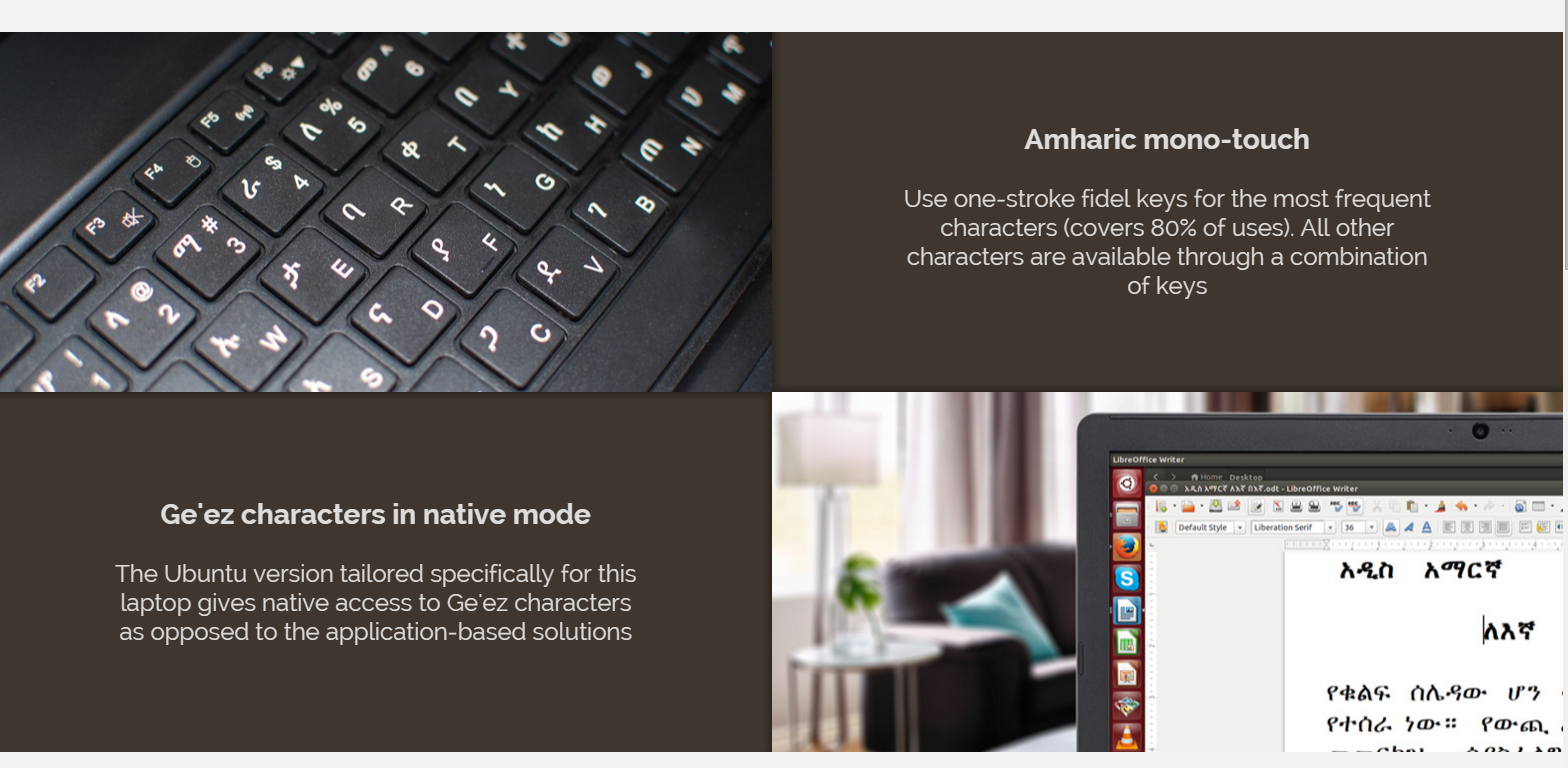
    But here is our Christmas gift, a light in the darkness by a fellow Ethiopian, Genet Ayele. She has given us a laptop with the first Amharic Keyboard. This is a great news for Ethiopia, a country that has more that 80 dialects, one of which is Amharic. Amharic uses its own phonetics and until now we have been using Software with English keyboard in order to write Amharic text.

    That is about to change with Ethiopass. Ethiopass is a laptop made in collaboration with FUJITSU Notebook. It comes with Intel® CoreTM i5-5200U processor and AMD RadeonTM R7 M260 graphics card with 2GB dedicated memory, in addition to the Amharic keyboard. From what we have gathered, the Price is 999 euros and offering free shipment until the end of January to all EU countries and Switzerland.

    We like it and Marry Christmas to you too 


    Visit  Her Website: http://ethiopass.visascol.com/


    Read more
  • 5G Mobile Wireless Technology

    - preliminary details and information about the wireless technology being developed for 5th generation or 5G mobile wireless or cellular telecommunications systems


    With the 4G telecommunications systems now starting to be deployed, eyes are looking towards the development of 5th generation or 5G technology and services.

    Although the deployment of any wireless or cellular system takes many years, development of the 5G technology systems is being investigated. The new 5G technologies will need to be chosen developed and perfected to enable timely and reliable deployment.

    The new 5th generation, 5G technology for cellular systems will probably start to come to fruition around 2020 with deployment following on afterwards.

    5G mobile systems status

    The current status of the 5G technology for cellular systems is very much in the early development stages. Very many companies are looking into the technologies that could be used to become part of the system. In addition to this a number of universities have set up 5G research units focussed on developing the technologies for 5G

    In addition to this the standards bodies, particularly 3GPP are aware of the development but are not actively planning the 5G systems yet.

    Many of the technologies to be used for 5G will start to appear in the systems used for 4G and then as the new 5G cellular system starts to formulate in a more concrete manner, they will be incorporated into the new 5G cellular system.

    The major issue with 5G technology is that there is such an enormously wide variation in the requirements: superfast downloads to small data requirements for IoT than any one system will not be able to meet these needs. Accordingly a layer approach is likely to be adopted. As one commentator stated: 5G is not just a mobile technology. It is ubiquitous access to high & low data rate services.

    5G cellular systems overview

    As the different generations of cellular telecommunications have evolved, each one has brought its own improvements. The same will be true of 5G technology.

    • First generation, 1G:   These phones were analogue and were the first mobile or cellular phones to be used. Although revolutionary in their time they offered very low levels of spectrum efficiency and security.
    • Second generation, 2G:   These were based around digital technology and offered much better spectrum efficiency, security and new features such as text messages and low data rate communications.
    • Third generation, 3G:   The aim of this technology was to provide high speed data. The original technology was enhanced to allow data up to 14 Mbps and more.
    • Fourth generation, 4G:   This was an all-IP based technology capable of providing data rates up to 1 Gbps.

    Any new 5th generation, 5G cellular technology needs to provide significant gains over previous systems to provide an adequate business case for mobile operators to invest in any new system.

    Facilities that might be seen with 5G technology include far better levels of connectivity and coverage. The term World Wide Wireless Web, or WWWW is being coined for this.

    For 5G technology to be able to achieve this, new methods of connecting will be required as one of the main drawbacks with previous generations is lack of coverage, dropped calls and low performance at cell edges. 5G technology will need to address this.

    5G specifications

    Although the standards bodies have not yet defined the parameters needed to meet a 5G performance level yet, other organisations have set their own aims, that may eventually influence the final specifications.

    Typical parameters for a 5G standard may include:


    SUGGESTED 5G WIRELESS PERFORMANCE
    PARAMETERSUGGESTED PERFORMANCE
    Network capacity 10 000 times current network
    Peak data rate 10 Gbps
    Cell edge data rate 100 Mbps
    Latency < 1 ms


    Source : http://www.radio-electronics.com/info/cellulartelecomms/5g-mobile-cellular/technology-basics.php

    Read more
  • Second Light Rail Route set to Begin Operation in Ethiopia

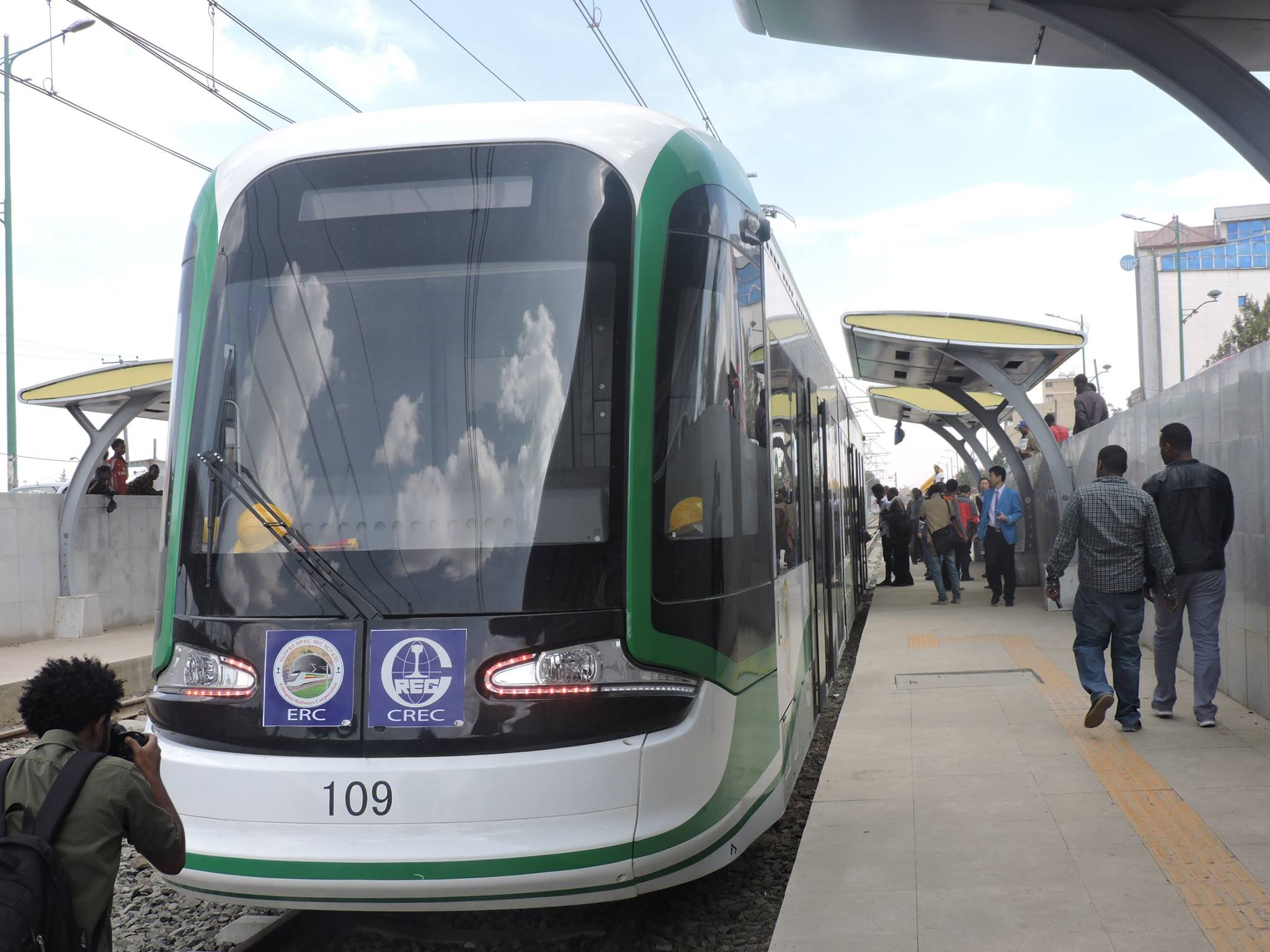
    The second route of Addis Ababa Light Rail system, stretching from Hayat Square-Megenagna-Torhailoch is about to begin operation by the end of October.

    According to FBC, Awoke Mulu, Public Relations Director at the Addis Ababa Light Rail Transit (AA-LRT), said that installation of electric cable, construction of ticket offices and recruitment of manpower are about to be completed to begin the railway service. He added that electronic ticketing machines are being installed in four chosen areas to replace the manual ticketing system.

    “All the 41 trams are going to start giving services to deal with the passengers’ complaint of a long time wait at the stations to board a train,” he added.

    The first railway route stretching from Menelik Square to Kality is transporting 60,000 passengers a day, generating 200,000 birr revenue.

    Source : http://www.africa-ontherise.com/second-light-rail-route-set-to-begin-operation-in-ethiopia/

    Read more
  • INSTRUCTIONS FOR THE 2017 DIVERSITY IMMIGRANT VISA PROGRAM (DV-2017)

    The congressionally mandated Diversity Immigrant Visa Program is administered annually by the Department of State. Section 203(c) of the Immigration and Nationality Act (INA) provides for a class of immigrants known as “diversity immigrants” from countries with historically low rates of immigration to the United States. For Fiscal Year 2017, 50,000 Diversity Visas (DVs) will be available. There is no cost to register for the DV program.

    Applicants who are selected in the program (“selectees”) must meet simple, but strict, eligibility requirements in order to qualify for a diversity visa. Selectees are chosen through a randomized computer drawing. Diversity visas are distributed among six geographic regions and no single country may receive more than seven percent of the available DVs in any one year.

    For DV-2017, natives of the following countries are not eligible to apply, because more than 50,000 natives of these countries immigrated to the United States in the previous five years: Bangladesh, Brazil, Canada, China (mainland-born), Colombia, Dominican Republic, Ecuador, El Salvador, Haiti, India, Jamaica, Mexico, Nigeria, Pakistan, Peru, Philippines, South Korea, United Kingdom (except Northern Ireland) and its dependent territories, and Vietnam. Persons born in Hong Kong SAR, Macau SAR, and Taiwan are eligible.

    Read More→


    Read more

Latest Articles

Most Popular